
In this blog, you'll discover what EFL teachers and language learners can learn from what is arguably the world's most intensive language school, explore the teaching methods behind its success, and discover its extensive collection of free online lessons, authentic materials and cultural resources.
I first became aware of the Defense Language Institute Foreign Language Center in Monterey, California, when Professor Kara Mac Donald, a faculty training specialist at the institute, was peer-reviewing a research paper of mine for the Korea TESOL Journal.
That connection led me to explore an institution with a fascinating challenge: how do you take adult learners, many starting with no previous knowledge of a language, and train them to reach professional working proficiency in some of the world's most difficult languages in an extraordinarily short period of time?
However, here's the reason I think teachers and language learners should pay particular attention to the Defense Language Institute: it makes an extraordinary collection of language-learning resources freely available online.
Through the DLI website, you can access thousands of free lessons and materials covering dozens of languages, from Arabic, Chinese and Korean - to French, Spanish, Russian and many others. These include authentic reading and listening activities, beginner courses, cultural resources, survival language materials, videos, folktales and even country guides.
While most of these resources are designed for English speakers learning other languages, many of the ideas behind them—from authentic materials and cultural content to real-world communication—are directly relevant to EFL teaching too.
And best of all, they're all completely free.
In this article, I'll show you where to find some of The DLI's most useful resources, as well as look at how the US military approaches the considerable challenge of teaching people foreign languages quickly and effectively - and what ordinary teachers and language learners might be able to learn from it.

What is The Defence Language Institute?
The Defense Language Institute Foreign Language Center (DLIFLC) is located at the Presidio of Monterey in California and provides intensive foreign-language education; primarily for US military personnel and other government professionals.
There, the stakes can be considerably higher than passing an end-of-term vocabulary test. Graduates may need their language skills for intelligence work and other government roles where accurately understanding another language and culture can have serious real-world consequences.
Like, life and death consequences... for hundreds of people.
That makes DLI an interesting institution for language teachers to examine. When effective communication matters this much, how do you teach it?
One answer is sheer exposure.
DLI courses are extraordinarily intensive compared with most school or private language programmes. Students typically spend six or seven hours in language classes every day, five days a week, before homework is even considered. Depending on the difficulty of the language, courses can last between 36 and 64 weeks.
The US Department of Defense gives a fascinating insight into the intensity of this training in its feature, 64 Weeks to Fluency: How Military Linguists Learn Their Craft.
But simply saying, study for seven hours a day, isn't particularly useful advice for the average teacher or independent learner.
Look more closely, however, and there are several ideas that we can take away.
1. Learn Words in Context, Not Just in Isolation
One of the most practical insights from former DLI learners is the emphasis on building language through meaningful phrases and complete sentences rather than relying entirely on isolated vocabulary lists.
In Olly Richards' fascinating video, How U.S. Military Linguists Learn Languages Fast, former DLI students discuss how vocabulary, grammar and communication develop throughout the intensive programme.
The practical lesson is simple: don't just learn the word. Learn how the word actually works.
Instead of learning:
decision
Learn:
I haven't made a decision yet.
Instead of:
recommend
Learn:
What would you recommend?
For independent learners, this gives vocabulary context, grammar and a model of natural usage at the same time. For teachers, it is a useful reminder that a vocabulary list shouldn't necessarily be the final destination. New words need to be placed into phrases, sentences and meaningful communication as quickly as possible.
Of course, that's something you'd already know if you read our earlier blog on how to conduct spelling test. But good to know our earlier research backs this up.
2. Separate the Skills—but Bring Them Back Together
DLI lessons can be divided into focused blocks covering reading, listening and speaking, alongside grammar, vocabulary, culture and relevant dialects.
There is something refreshingly straightforward about this. Not every activity needs to practise every language skill simultaneously.
Sometimes learners need to concentrate on listening. Sometimes they need to read closely. Sometimes they need uninterrupted opportunities to speak.
The important thing is that these skills eventually come back together in meaningful language use.
A learner might first listen to a news report, identify key information, discuss what they understood with a partner and then explain the story in their own words. Reading, listening and speaking remain distinct skills, but they support one another.
For teachers, the takeaway is not to cram everything into every activity. Give learners time to focus deeply on a particular skill, then create opportunities to use what they have learned.
3. Increase the Target Language Gradually
One aspect of the DLI approach that I particularly like is that students are not necessarily thrown into complete immersion from the first minute of their first lesson.
According to accounts from former students, instructors use the target language while teaching but may initially provide explanations in English. As learners progress, the amount of target language increases dramatically.
This feels more realistic than treating the use of a learner's first language as an all-or-nothing debate.
The aim is clear: increase meaningful exposure to the target language as learners become capable of handling it.
For teachers, that could mean giving a simple instruction in English early in a course but gradually replacing it with the target-language equivalent. Classroom routines are particularly useful for this because learners hear the same functional language repeatedly and in a clear context.
For independent learners, the same principle applies. Don't wait until you feel completely ready before watching, reading or listening to real content. Start with manageable material and progressively increase the amount and difficulty of your exposure.
4. Use Real Language From The Real World
DLI students engage with authentic language through sources such as news, films, books and music. This extends learning beyond carefully controlled textbook dialogues and exposes learners to language as it is actually used.
That doesn't mean throwing a beginner into a two-hour political debate and telling them to work it out.
The key is finding material that is challenging but still offers a realistic opportunity to understand something.
A beginner might listen for familiar words. An intermediate learner might identify the main idea of a news story. A more advanced learner might look for tone, implied meaning or the speaker's intentions.
For teachers, authentic materials don't always need to become elaborate worksheets. A photograph, advertisement, short video clip, menu, weather forecast or social media post can create a meaningful reason to use language.
The goal isn't to understand every word.
It's to get better at understanding the language that real people actually use.
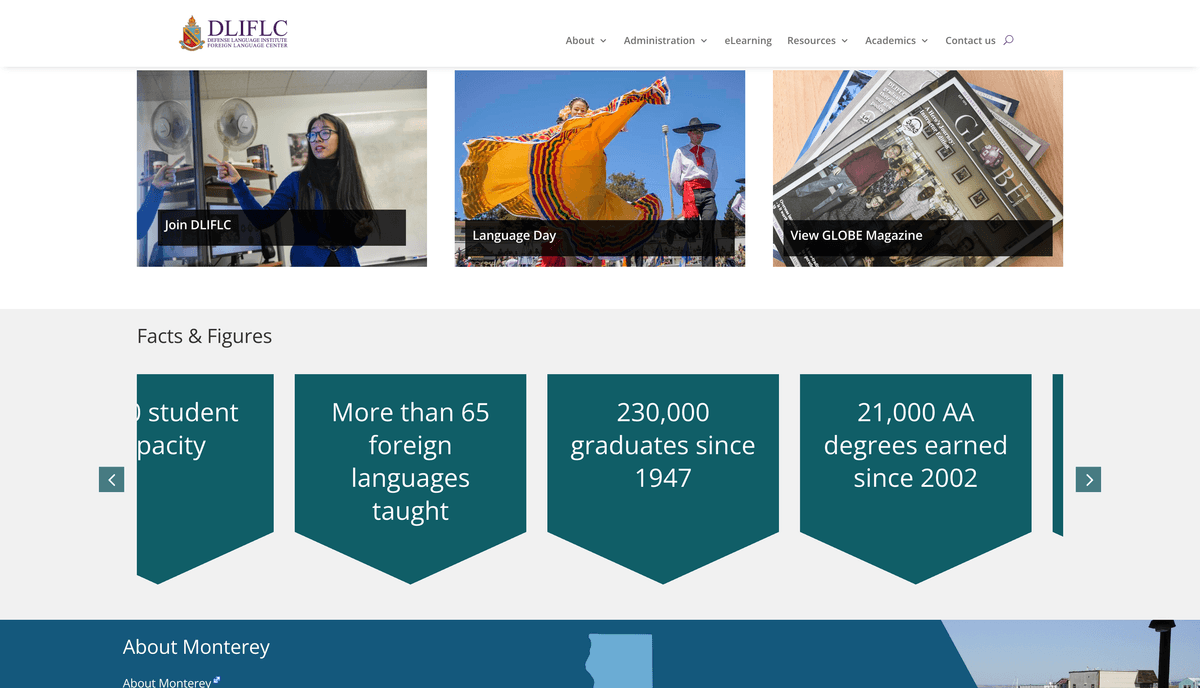
And this is also one of the great strengths of DLI's free Global Language Online Support System (GLOSS), which uses authentic materials to build reading and listening skills at different proficiency levels.
5. Culture Isn't an Extra
The DLI doesn't treat language and culture as completely separate subjects.
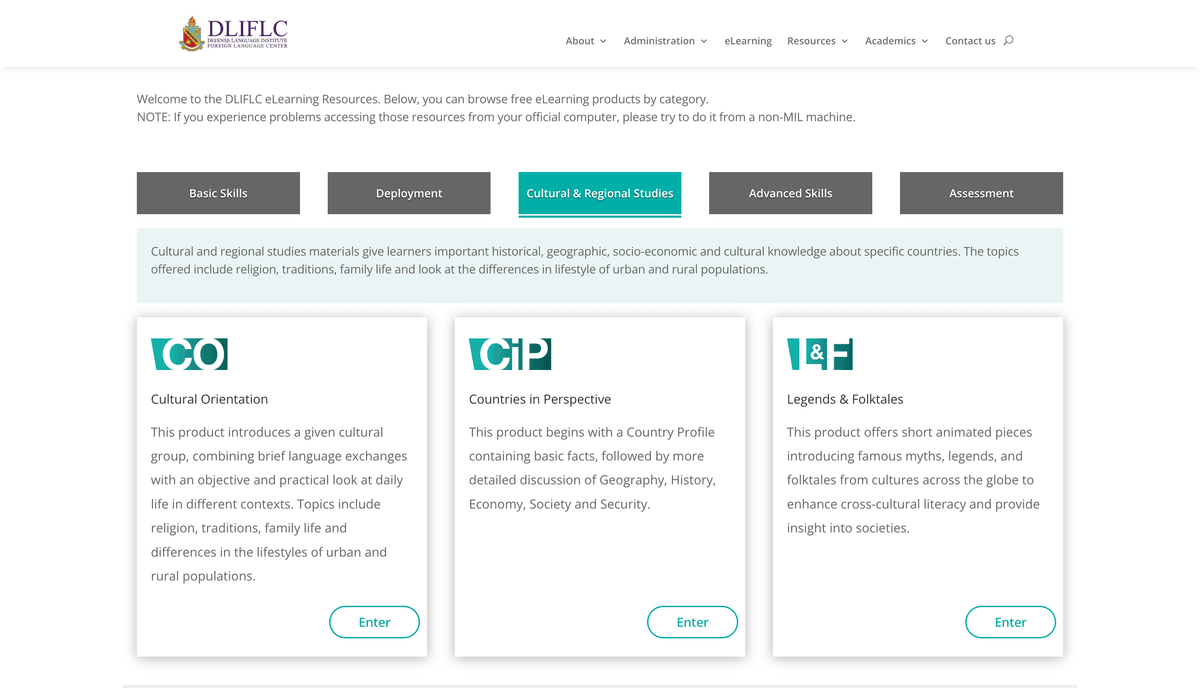
Its programmes incorporate cultural knowledge, current affairs and the social contexts in which languages are actually used. Its free online resources also include dedicated cultural materials covering areas such as folk tales, traditions, religion, family life, geography, history and society.
This matters because knowing the dictionary meaning of every word in a sentence doesn't necessarily mean understanding what someone actually means.
Humour, politeness, status, gestures, indirect language, shared history and social expectations can all affect communication.
For EFL teachers, particularly those teaching learners who may eventually use English internationally, culture should not simply mean an occasional lesson on Christmas, Thanksgiving or afternoon tea. It can mean exploring how people disagree politely, how humour changes between cultures, why directness can be interpreted differently or how the same English phrase can carry different meanings depending on context.
Language doesn't exist outside culture. The two constantly shape one another.
6. Create a Real Reason to Communicate
DLI training includes realistic simulations in which learners use their target language in situations such as navigating airports, hotels, markets and other real-world environments.
This is where I see a particularly strong connection with cooperative learning.
As someone who has spent years using and researching cooperative learning in the EFL classroom, many of the underlying principles feel immediately familiar: learners actively using the target language, communicating with one another, solving problems together and participating in realistic tasks rather than simply listening to a teacher explain the language.
The important part is that communication has a purpose.
One learner has information another needs. A team has a problem to solve. Someone needs to ask a question, clarify an idea, explain something or respond to another person's point of view.
This is one reason I believe cooperative learning is particularly well suited to the EFL classroom. In a traditional teacher-led exchange, one learner may speak while 20 or 30 others listen. Structured pair and team interaction can allow many learners to speak simultaneously, dramatically increasing opportunities to actually use the target language.
The connection shouldn't be overstated: I am not suggesting that DLI formally follows any particular model of cooperative learning. But the overlap is difficult to ignore. Active interaction, meaningful communication, problem-solving and realistic simulations all move language learning away from passive reception and towards actual use.
If you'd like to explore this idea further, read my article Why Cooperative Learning Works So Well in the EFL Classroom, which looks at the research behind interaction, anxiety, motivation and language acquisition.
What Can an Ordinary EFL Teacher Realistically Take from DLI?
There is an obvious limitation when comparing DLI with an ordinary EFL classroom.
Most of us don't teach highly selected adult learners for six or seven hours a day. We may have children or teenagers with very different levels of motivation, large classes, limited resources and perhaps only two or three English lessons each week.
So copying the DLI model isn't realistic—and it isn't the point.
What we can do is borrow some of its underlying ideas:
Teach vocabulary in useful phrases and sentences, not only as isolated words. Gradually increase meaningful exposure to the target language. Give individual language skills focused attention. Use authentic materials where appropriate. Connect language with culture. Create realistic reasons to communicate. And give learners more opportunities to actively use the language with one another.
None of these ideas requires a military budget or seven hours of daily instruction.
They require thoughtful lesson design.
Free DLI Language Resources You Should Explore
This is perhaps the most immediately useful part of the Defense Language Institute for teachers and independent learners: its extensive collection of free online resources.
Some materials have a clear military focus and won't be equally relevant to everyone. But there is a remarkable amount of freely accessible language and cultural content covering dozens of languages and a wide range of proficiency levels.
Here are the resources I think are most worth exploring.
1. Real Material For Listening Practice
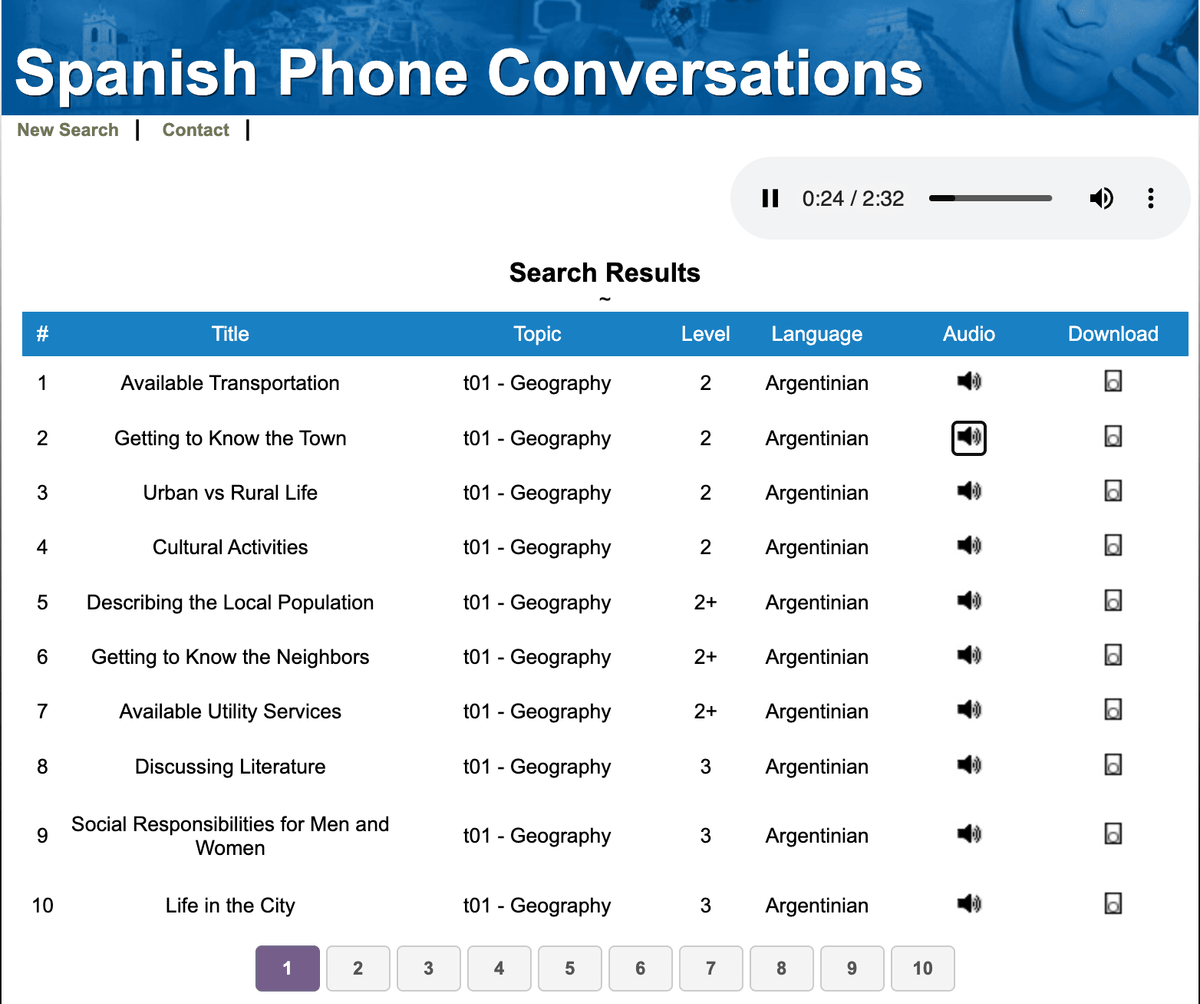
Its section on Phone Conversations hosts audio recordings of more than 300 casual phone conversations (all searchable by topic) in non-standard dialects which you can access and play for free. They're only in Spanish and Arabic at the moment, but that might change in the future. And some of the Arabic materials include lesson plans for classroom use as well.
As an EFL or ESL teacher, it's often hard to find good, authentic materials to use in your class. It's even harder to find good, authentic materials for listening practice. And familiarity with regional dialects and realistic dialogues is key to achieving advanced listening proficiency.
Well, the DLI site has you covered...
2. GLOSS: Global Language Online Support System
GLOSS provides thousands of free lessons based largely on authentic reading and listening materials.
You can search by language, proficiency level, skill and topic, making it possible to find materials suited to specific learning needs. Lessons can include audio, authentic texts, comprehension activities, vocabulary support and other exercises.
For independent learners who already have some knowledge of their target language, this is probably one of the most immediately useful resources in the entire DLI collection.
For teachers, it is also an excellent source of authentic materials and supplementary practice.
3. HeadStart2
HeadStart2 is designed to give beginners an introduction to a new language.
Courses can include approximately 80 to 100 hours of self-paced training, depending on the language and programme, beginning with sounds and scripts before progressing to basic communication.
Some content is specifically designed for military personnel and situations, so it won't all be relevant to the average language learner. Nevertheless, the introductory materials can still be useful for anyone starting one of the available languages.
4. Cultural Orientation
The Cultural Orientation resources explore the societies and cultures connected with different languages and regions.
Topics can include traditions, religion, family life, communication, geography and differences between urban and rural communities.
These resources are particularly useful for teachers looking for ideas about integrating language and culture rather than treating cultural learning as an occasional extra.
5. Countries in Perspective
Countries in Perspective goes beyond language instruction to provide detailed information about individual countries, including their geography, history, economy, society and security.
These resources may be particularly valuable to advanced language learners who want to understand more of the wider context surrounding the language and its speakers.
6. Legends and Folktales
The Legends and Folktales collection uses animated stories to introduce myths, legends and traditional tales from different cultures.
For teachers, these can provide an interesting starting point for lessons involving storytelling, listening, cultural comparison and discussion.
7. Survival Kits and Language Guides
DLI also provides language survival materials designed around practical communication needs. These can include useful words and phrases for situations such as introductions, directions, food and everyday interactions.
Again, some of the material has been designed specifically for military personnel. But for independent learners, travellers and teachers looking for practical language examples, there is still plenty worth exploring.
The best place to begin is the DLIFLC eLearning portal, where you can browse the full collection of free language and cultural resources.
Want to See How Military Linguists Actually Learn?
For a fascinating deeper look at life inside the DLI, I recommend Olly Richards' video, How U.S. Military Linguists Learn Languages Fast.
The video draws on the experiences of former DLI students and explores the intensity of the programme, classroom methods, immersion, simulations and the daily routine of military language learners.
It's important to distinguish between an official description of DLI methodology and the personal experiences of former students. But that's also what makes the video so interesting: it offers a glimpse of what studying at one of the world's most intensive language schools can actually feel like from the learner's perspective.
And perhaps the biggest lesson is surprisingly simple.
There is no secret military shortcut to language learning.
DLI students spend an extraordinary amount of time with their target language. They read it, listen to it, speak it, study the cultures behind it and use it in realistic situations. They progressively increase their exposure and work intensively across different language skills.
Most of us can't recreate those conditions.
But we can learn from them.
Whether you're teaching a class of 30 EFL learners or trying to learn a new language yourself, the underlying principles remain useful: increase meaningful exposure, learn language in context, interact with other people, connect language with culture and create genuine reasons to communicate.
And thanks to the Defense Language Institute's extensive collection of free online resources, you don't just have to read about how they approach language learning. You can explore the resources and try them for yourself.